
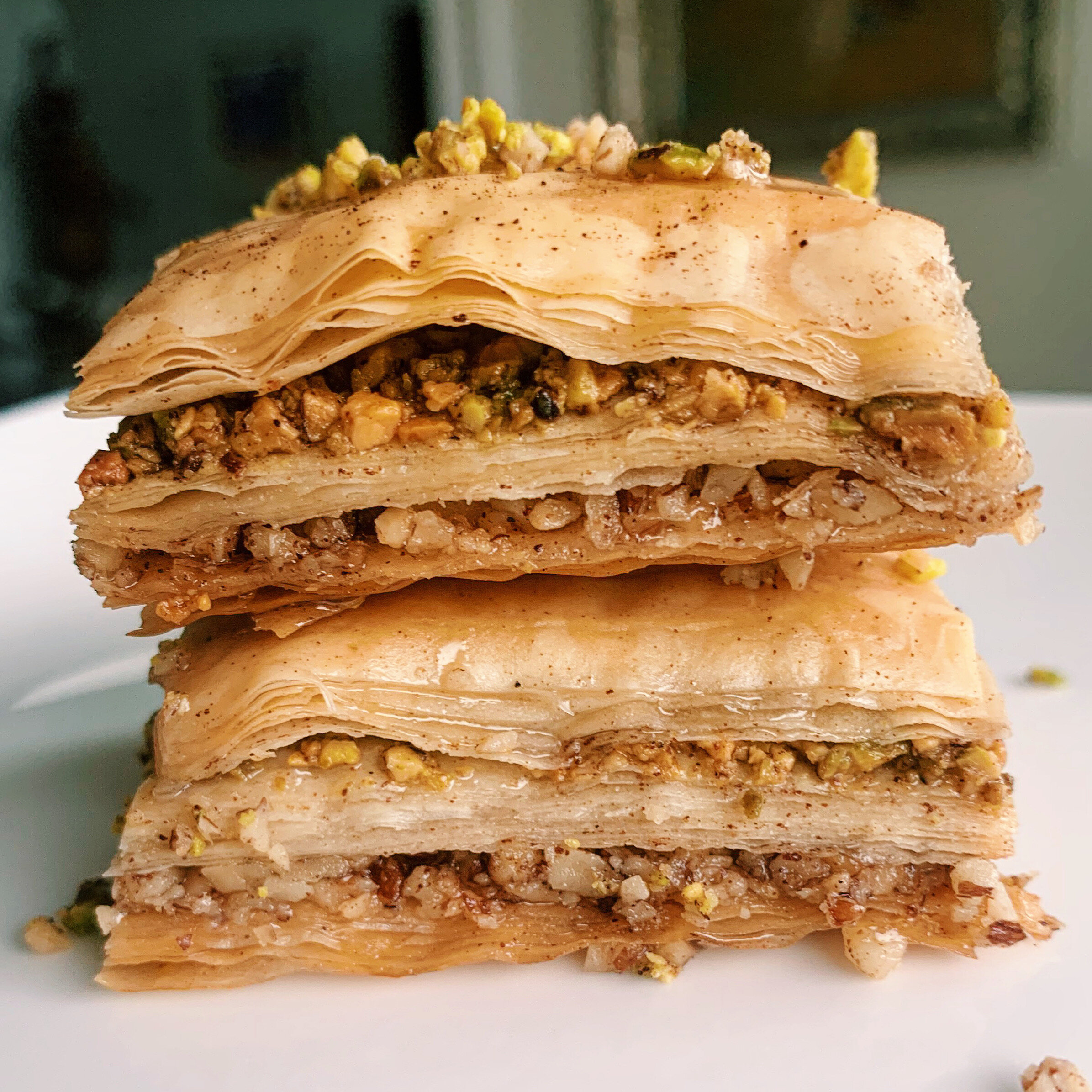
The Irresistible Sweetness of Baklava
Baklava, a delectable pastry that hails from the Middle East, is a true delight for anyone with a sweet tooth. This rich and indulgent dessert consists of layers of thin phyllo dough, nuts (often pistachios or walnuts), and a sweet syrup or honey glaze.
One bite of baklava reveals a symphony of flavors and textures – the crispiness of the phyllo dough, the crunch of the nuts, and the sweetness of the syrup all come together in perfect harmony. It’s no wonder that baklava is beloved around the world for its unique taste and irresistible allure.
While the exact origins of baklava are debated, it is widely believed to have been popularized during the Ottoman Empire. Today, you can find countless variations of baklava across different cultures, each with its own twist on this classic dessert.
Whether enjoyed as a special treat during holidays or as a daily indulgence, baklava never fails to captivate with its intricate layers and sumptuous flavors. So next time you have a craving for something sweet and satisfying, treat yourself to a piece of baklava and experience the magic of this timeless dessert.
Everything You Need to Know About Baklava: Ingredients, Origins, and Homemade Tips
- What is baklava?
- What are the ingredients in baklava?
- How is baklava made?
- Where does baklava originate from?
- Is baklava difficult to make at home?
What is baklava?
Baklava is a beloved dessert originating from the Middle East, known for its intricate layers of thin phyllo dough, nuts (commonly pistachios or walnuts), and a sweet syrup or honey glaze. This delectable pastry offers a delightful combination of textures and flavors, with the crispy phyllo dough contrasting beautifully with the crunchy nuts and the sweet syrup. Believed to have gained popularity during the Ottoman Empire, baklava has since become a cherished treat enjoyed worldwide for its rich taste and irresistible sweetness.
What are the ingredients in baklava?
Baklava, a beloved Middle Eastern dessert, typically consists of layers of delicate phyllo dough, a generous filling of chopped nuts (often pistachios, walnuts, or almonds), and a sweet syrup made from sugar, water, and sometimes honey. The combination of these simple yet flavorful ingredients creates the signature taste and texture that make baklava so irresistible. Each layer of phyllo dough adds a crispy contrast to the rich nut filling, while the sweet syrup binds everything together in a harmonious blend of sweetness and crunch. Whether enjoyed as a special treat or a daily indulgence, baklava’s ingredients come together to create a truly decadent dessert experience.
How is baklava made?
Baklava, a beloved dessert with roots in the Middle East, is made through a meticulous process that results in its irresistible layers of phyllo dough, nuts, and sweet syrup. To create this delectable treat, thin sheets of phyllo dough are brushed with butter and layered with a mixture of finely chopped nuts, typically pistachios or walnuts. Between each layer of nuts and dough, a generous drizzle of sweet syrup or honey is added to infuse the pastry with its signature sweetness. Once assembled, the baklava is baked until golden and crispy, then topped with more syrup before being left to cool and set. The end result is a dessert that captivates the senses with its rich flavors and delicate textures, making every bite a truly indulgent experience.
Where does baklava originate from?
Baklava’s origins are a subject of much debate and intrigue, with various regions claiming to be the birthplace of this beloved dessert. While the exact origin remains uncertain, it is widely believed that baklava has roots in the imperial kitchens of the Ottoman Empire. This decadent pastry likely evolved over centuries, drawing influences from different cultures along the way. Today, baklava is enjoyed worldwide, transcending borders and bringing joy to all who savor its sweet and nutty layers of phyllo dough drenched in syrup or honey.
Is baklava difficult to make at home?
Making baklava at home can seem daunting to many, given its intricate layers and delicate phyllo dough. While it may require some patience and precision, baklava is definitely achievable for home cooks with a bit of practice. The key lies in working carefully with the thin layers of phyllo dough, generously buttering each sheet to create that signature flakiness. Additionally, the process of layering nuts and spices adds depth to the flavor profile. With attention to detail and following a good recipe, anyone can master the art of making baklava at home and enjoy the sweet rewards of their labor.